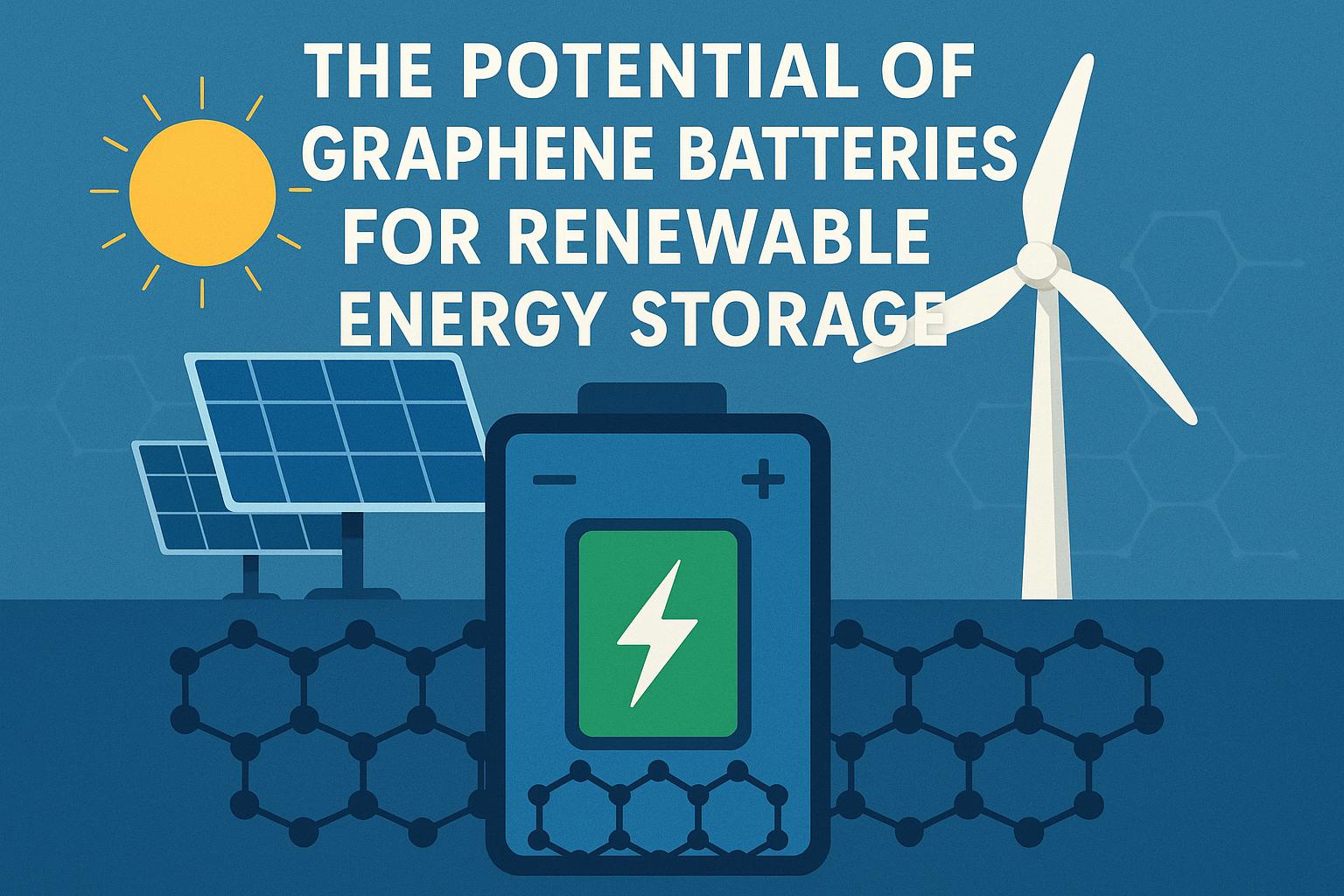
The Promise of Graphene in Energy Storage
The advancement of energy storage technologies is crucial for enhancing the efficiency and sustainability of renewable energy systems. One promising material in this realm is graphene, a single layer of carbon atoms arranged in a two-dimensional honeycomb lattice. Due to its unique properties, graphene holds significant potential in revolutionizing battery technology.
Characteristics of Graphene
To understand why graphene is viewed as a game-changer for batteries, it is essential to recognize its distinct characteristics. Graphene exhibits several properties that are particularly beneficial for energy storage applications.
Firstly, high electrical conductivity sets graphene apart as an exceptional conductor of electricity. This attribute facilitates faster electron transfer, which enhances battery performance by reducing charging times and increasing power output.
In addition to its conductive properties, graphene is known for its exceptional strength and flexibility. Despite being incredibly thin, graphene is immensely strong and can withstand mechanical stresses. This is advantageous for producing flexible battery designs, a feature increasingly in demand for advanced technological applications such as wearable electronics and flexible displays.
Moreover, the large surface area of graphene contributes significantly to its performance in energy storage. The expansive surface area allows for a higher concentration of electrodes, which can enhance the capacity of a battery. This characteristic is critical in applications that require significant energy storage in a compact form factor.
Graphene Batteries vs. Traditional Batteries
When compared to traditional lithium-ion batteries, graphene batteries exhibit several noteworthy advantages. These benefits could lead to significant advancements in battery technology and energy storage solutions.
Efficiency and Longevity: Graphene batteries, due to their improved electron mobility, can be charged more quickly than their traditional counterparts. This rapid charging capability comes without compromising the longevity of the battery. The result is an extended cycle life, which means batteries last longer and have fewer replacements, directly impacting overall operational costs and enhancing the sustainability of energy storage systems.
Energy Density: The intrinsic properties of graphene support higher energy densities. This is a crucial advantage since higher energy densities translate to longer durations of energy storage for the same battery volume. Consequently, it provides better performance and efficiency than lithium-ion batteries for devices and systems that rely on sustained energy output.
Temperature Stability: Graphene batteries stand out for their ability to maintain superior performance across various temperature ranges. Unlike many conventional batteries that suffer efficiency losses under extreme temperatures, graphene batteries demonstrate robust stability. This feature makes them suitable for use in a variety of climatic conditions, extending their applicability to diverse geographical locations.
Applications in Renewable Energy Systems
The implementation of graphene batteries holds potential in optimizing renewable energy systems such as solar and wind power installations, which often deal with variability in energy supply.
Grid Storage: One of the most promising applications of graphene technology is in enhancing grid storage solutions. Graphene batteries could facilitate more efficient storage, enabling the stable integration of intermittent renewable energy sources into national grids. Their efficiency and large capacity make managing energy flows and demands more feasible, especially as renewable sources like solar and wind become more prominent.
Decentralized Energy Systems: High efficiency and capacity render graphene batteries ideal for decentralized energy models. In decentralized systems, local communities and individual users generate, store, and manage their power resources independently. Graphene batteries support this independence by providing a reliable and efficient storage solution that can be tailored to varying scales of operation.
The application of these batteries can promote the growth of small and agile energy networks that cater to specific local needs, hence contributing to a more resilient and flexible energy ecosystem.
Challenges and Considerations
Despite the promise of graphene batteries, there are several challenges to overcome before widespread adoption can occur. Currently, the high cost of production remains a significant barrier. Producing graphene at a scale that can be used economically in consumer and industrial applications is expensive, primarily due to the complex processes involved and the level of purity required.
Further complicating matters are scalability issues. As of now, the production of large quantities of high-quality graphene remains a technical challenge that must be addressed to meet the increasing demands for advanced battery technology.
Moreover, more research and development is needed to fully optimize the performance of graphene-based batteries. While initial results are promising, understanding the long-term behaviors and potential degradation of graphene within battery systems is crucial for moving towards commercialization.
Conclusion
In summary, while the technological and practical hurdles are significant, the potential of graphene batteries in renewable energy storage remains an inspiring frontier for researchers and industry leaders alike. Continued investment and innovation are necessary to unlock the full benefits of graphene-based energy storage and propel the shift toward a more sustainable energy future. The path forward involves overcoming the current challenges through interdisciplinary collaboration and technological breakthroughs, ensuring that graphene’s vast capabilities are harnessed effectively and efficiently for a cleaner and more resilient global energy landscape.