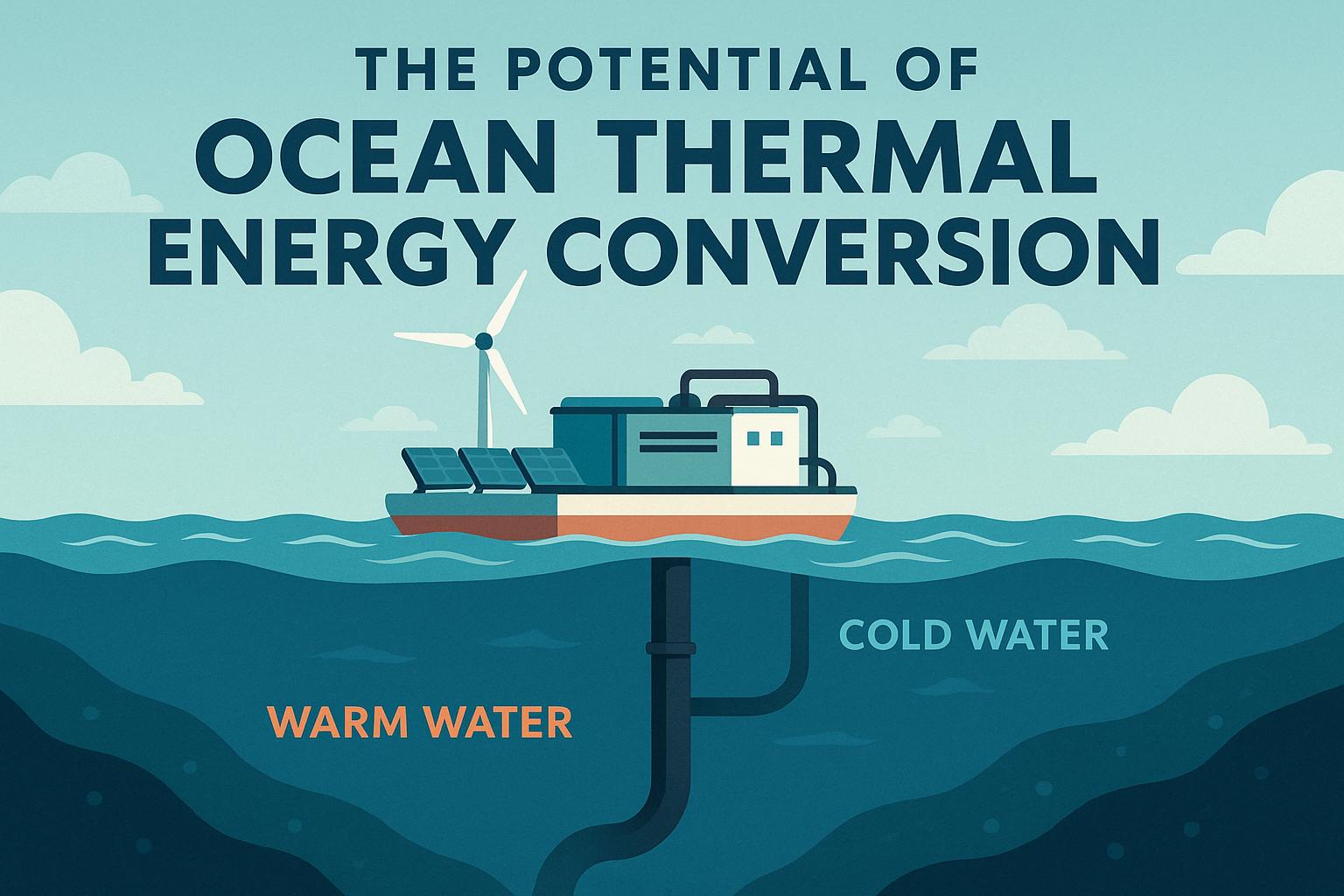
Understanding Ocean Thermal Energy Conversion (OTEC)
Ocean Thermal Energy Conversion (OTEC) is an innovative renewable energy technology that harnesses the temperature gradient between warmer surface waters and colder deep seawaters to generate electricity. This energy conversion process is of particular interest in tropical and subtropical regions where the differential in ocean temperatures is pronounced enough to effectively drive the system. The consistent availability of the temperature gradient in these regions presents a significant opportunity for sustainable power generation.
Principles of OTEC
OTEC operates on the Rankine cycle, a principle of thermodynamics. This cycle involves using the ocean’s inherent thermal gradient to extract energy efficiently. In OTEC systems, a working fluid with a low boiling point, commonly ammonia, plays a vital role. Warm surface seawater heats and vaporizes this working fluid. The resultant vapor then powers a turbine, which is connected to an electricity generator, thereby producing electric power. Once the vapor has served its purpose of moving the turbine, it is condensed back into a liquid using cold deep seawater, enabling the cycle to repeat indefinitely. This continuous cycle characterizes the stable electricity generation potential of OTEC.
Types of OTEC Systems
OTEC systems are generally classified into three main types: closed-cycle, open-cycle, and hybrid systems, each offering unique operational mechanisms.
Closed-cycle systems: These systems involve a working fluid like ammonia or chlorofluorocarbon (CFC), which remains in a closed loop. The fluid is vaporized by warmth from surface waters and, after driving the turbine, is condensed again for repeated cycles without direct interaction with seawater. This method is advantageous for its efficiency in a controlled environment.
Open-cycle systems: In contrast, these systems utilize seawater directly as the working fluid. Warm surface seawater is flash-evaporated in a vacuum chamber, producing steam that powers the turbine. The steam is then condensed back into liquid with the aid of cold deep seawater. One ancillary benefit of open-cycle systems is the production of desalinated fresh water as a byproduct, helpful in addressing water scarcity challenges.
Hybrid systems: This innovative approach integrates features from both closed and open cycle systems, aiming to maximize the energy extraction process’s efficiency. By combining the strengths of the two, hybrid systems hold promise for optimization and resource efficiency.
Advantages of OTEC
The potential benefits of OTEC are substantial and diverse. As a renewable energy source, OTEC offers a continuous baseload power supply, which is not as variable as solar and wind energy. This steadiness makes OTEC an attractive complement to more intermittent renewable resources. Additionally, OTEC provides a method of energy production with minimal greenhouse gas emissions, presenting an environmentally friendly alternative to fossil fuel-based power generation.
Another advantage of OTEC systems, particularly open-cycle systems, is their capacity to produce fresh water, which is especially valuable in regions facing water scarcity. By co-locating OTEC installations with desalination plants, communities can derive dual benefits of electricity and fresh water, enhancing the technological appeal and economic feasibility of OTEC projects in water-scarce areas.
Challenges and Limitations
Despite the promising advantages, OTEC encounters several challenges that limit its widespread adoption. The initial capital investment required to build OTEC plants is quite high, rendering it less competitive compared to conventional energy sources. This financial barrier can deter potential investors and developers, hindering the progress of OTEC deployment.
Furthermore, the large-scale implementation of OTEC technology raises environmental concerns, particularly regarding impacts on marine ecosystems and biodiversity. Careful assessment and management strategies are necessary to address these ecological implications and ensure sustainable development.
Advancements in materials science, engineering, and economic analysis are crucial to overcoming these challenges. Solutions that enhance system efficiency, reduce costs, and allow for expansion into regions with less favorable thermal gradients are actively being pursued by researchers and engineers worldwide.
The Future of Ocean Thermal Energy Conversion
Despite these challenges, the future outlook for OTEC is optimistic, buoyed by ongoing research and development initiatives. With the relentless demand for sustainable energy solutions, OTEC’s potential contribution to global energy portfolios is being increasingly recognized. This is especially true for regions where thermal gradients are most prominent, situating them as prime candidates for OTEC projects.
Continued advancements in technology, coupled with increasing economic viability, may herald a new era for OTEC. With further exploration and refinement, OTEC could occupy a significant role in the global shift towards sustainable energy sources, substantially contributing to energy security and environmental sustainability.
In conclusion, while Ocean Thermal Energy Conversion remains a conceptually and technologically appealing renewable energy option, substantial work remains in terms of improving the technology, reducing costs, and ensuring environmental compatibility. Future efforts are critical to realizing the full potential of this technology and its integration into mainstream energy systems. For more detailed insights and ongoing advancements in OTEC, research publications and resources from energy institutions can provide valuable information continuing to drive the field forward.