Introduction
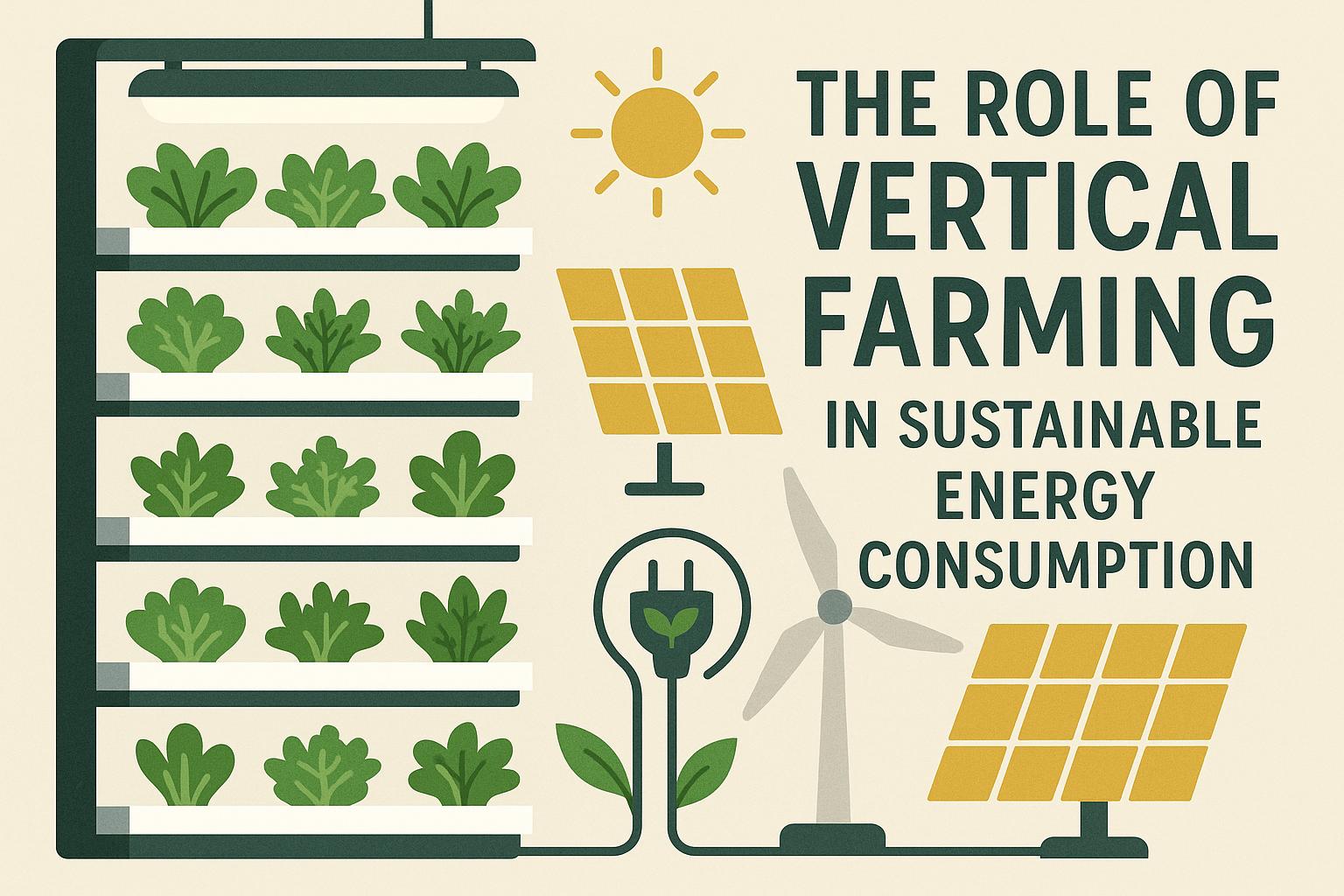
Vertical farming is an agricultural innovation aimed at addressing several contemporary issues, including food security, land usage, and environmental sustainability. By utilizing urban spaces and modern technologies, vertical farming presents an intriguing approach to sustainable energy consumption. Through better energy efficiency, resource management, and renewable energy integration, vertical farming can play a significant role in shaping the future of agriculture.
Energy Efficiency in Vertical Farming
Vertical farming systems are designed to maximize efficiency by growing crops in stacked layers within controlled environments. This approach reduces the need for transportation and packaging, which are major sources of energy consumption in traditional farming and food distribution. Moreover, the controlled environment allows for optimized energy use in lighting, temperature control, and irrigation systems.
LED Lighting Systems
One of the major energy consumers in vertical farming is artificial lighting. LED lighting systems are widely adopted due to their energy efficiency and the ability to provide the specific light spectrums required for optimal plant growth. These systems offer greater energy savings compared to traditional fluorescent or halogen bulbs. Additionally, high-quality LED systems feature adjustable light settings which can further reduce energy use by tailoring light conditions to the needs of different plant species.
LED lighting plays a crucial role in mimicking natural sunlight. By customizing light wavelengths, vertical farms can ensure that plants receive the optimal light mix, ensuring better growth rates and improved crop quality. Advances in LED technology continue to enhance these benefits, introducing tunable LEDs that adjust the light spectrum and intensity based on the plant’s growth stage.
Climate Control and Energy Management
Vertical farms utilize advanced climate control systems to maintain the ideal growing conditions year-round. This involves monitoring and regulating temperature, humidity, and CO2 levels which are crucial for plant growth. Proper insulation and smart energy management systems can greatly reduce energy consumption by maintaining these conditions with minimal energy input.
Emerging technologies and smart algorithms in climate control enable vertical farms to predict weather changes or real-time climate variations, adjusting indoor conditions proactively rather than reactively. This not only conserves energy but also optimizes the growth environment, increasing yields while lowering the cost of energy use. Energy recuperation systems can also harvest and reuse energy, further enhancing energy efficiency.
Integration of Renewable Energy Sources
Vertical farming also provides a platform to integrate renewable energy sources. Solar panels, wind turbines, and bioenergy systems can be incorporated to power various operations in vertical farms, thereby reducing dependency on non-renewable energy sources.
Solar Power
By positioning vertical farms in urban areas, there is the potential to harness solar power from rooftops or surrounding structures. Photovoltaic panels can be used to generate electricity for lighting, climate control, and other energy-demanding systems, resulting in significant cost savings and reduced carbon footprint.
The integration of solar power offers dual benefits by increasing energy self-sufficiency and minimizing operational costs. Innovations in photovoltaic technology continue to drive efficiency, making it easier to incorporate solar installations in compact urban areas. The adaptability of solar systems, combined with battery storage solutions, ensures continuous operation even during less sunny periods, enhancing resilience and sustainability.
Wind and Bioenergy Solutions
In regions with suitable wind conditions, vertical farms can benefit from small-scale wind power systems. Furthermore, bioenergy produced from organic waste generated by the farms themselves can serve as an alternative energy source, creating a more sustainable farming cycle.
Wind power provides an additional layer of sustainability, particularly in urban settings where space is limited. Innovations in vertical axis wind turbines make them well-suited for urban deployment, offering a compact and effective solution to harness wind energy. The use of bioenergy contributes to a closed-loop system, where waste from the farm is repurposed, supporting both energy production and soil nutrient enrichment.
Water and Nutrient Efficiency
Vertical farming often utilizes hydroponic or aeroponic growing systems, which are known for their efficient use of water and nutrients. These systems circulate water containing dissolved nutrients to the plants’ roots, significantly reducing water waste compared to traditional soil-based agriculture. Energy-efficient water pumps and recycling systems can further enhance overall resource management.
Hydroponic and aeroponic systems operate on the principle of minimizing input while maximizing output. By carefully managing every drop of water and nutrient fed to plants, these systems effectively conserve resources. Moreover, the integration of sensors and IoT (Internet of Things) devices allows for precise monitoring and control of water and nutrient levels, ensuring plants receive exactly what they need without excess, leading to significant cost and environmental savings.
Conclusion
Vertical farming provides an innovative approach to reducing energy consumption and promoting sustainability in the agricultural sector. Through efficient resource management, integration of renewable energy, and advancements in energy-efficient technologies, vertical farms can contribute significantly to global efforts in reducing carbon emissions and creating sustainable urban environments. Adapting these practices on a larger scale could see vertical farming play a critical role in reshaping the future of food production and energy utilization.
The emphasis on sustainable practices and energy efficiency positions vertical farming as a key player in the future of agriculture. The combination of traditional farming methods with modern technology creates a synergy that enhances productivity while minimizing ecological impact. As urban centers continue to expand, the role of vertical farming will only grow in importance, offering a viable solution for sustainable urban agriculture.
To learn more about vertical farming and its role in sustainable agriculture, visit leading agricultural innovations.