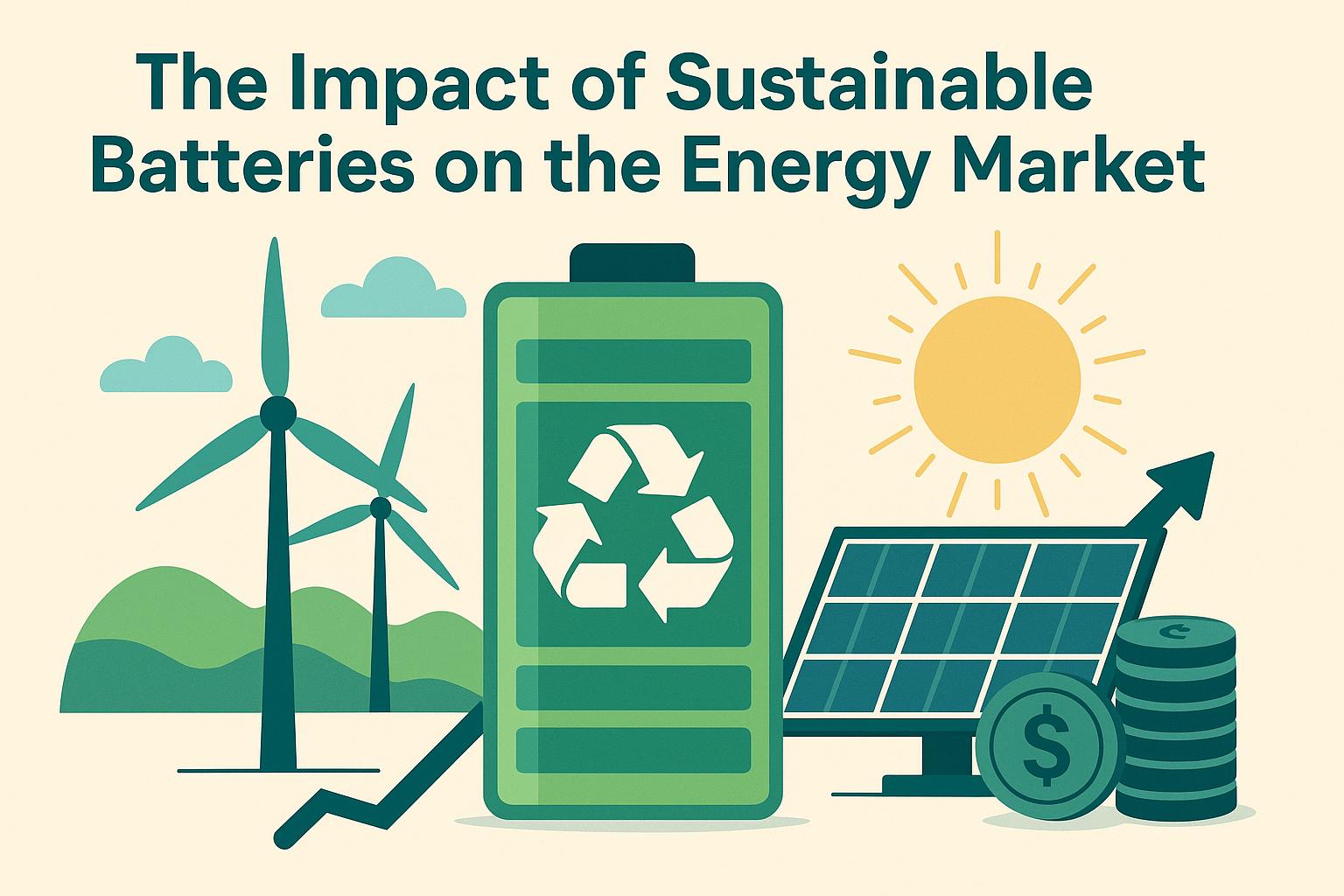
The Role of Sustainable Batteries in the Energy Market
The global energy market is undergoing a significant transition with the increasing integration of renewable energy sources. A pivotal component of this shift is the development of sustainable battery technologies. These batteries are designed to store energy more efficiently and with a reduced environmental footprint. This article explores the influences of sustainable batteries on the energy market.
Advancements in Battery Technology
One of the main drivers of the energy market transformation is the advancement in battery technology. New materials and processes have been developed to create batteries that are both more efficient and environmentally friendly. For example, lithium-ion batteries have traditionally dominated the market, but new alternatives, such as solid-state batteries and lithium-sulfur batteries, show promise due to their higher energy density and safety improvements. Researchers and companies are also exploring recycling methods and renewable materials to reduce the environmental impact of battery production.
Modern scientific endeavors are continuously exploring adaptable ways to enhance these technologies. Solid-state batteries, for instance, utilize solid electrolytes instead of liquid ones, thereby providing higher safety, longer lifespans, and faster charging capabilities. This characteristic makes them attractive for a range of applications, from small consumer electronics to large-scale storage systems.
In the realm of lithium-sulfur batteries, the key advantage lies in their ability to store a significantly larger amount of energy by weight than traditional lithium-ion batteries. This feature is particularly important for applications where weight is a critical factor, such as electric vehicles and aerospace applications. However, there remain challenges, primarily concerning the cycle life and durability of these batteries, which are the focus of ongoing research.
Another noteworthy advancement in battery technology includes the development of sodium-ion batteries. These batteries offer similar benefits to lithium-ion batteries but employ sodium, a more abundant and less costly element, which potentially reduces manufacturing costs and reliance on scarce resources. Although still in the developmental stage, sodium-ion technology holds the promise to be a cost-effective option in the sustainable battery market.
Impact on Energy Storage
Sustainable batteries play a crucial role in energy storage, which is essential for balancing supply and demand, especially with intermittent renewable energy sources like solar and wind. Improved storage capacities mean that energy generated during peak production periods can be retained and used when demand is higher. This reduces the reliance on fossil fuels and supports the stability of the grid. The introduction of large-scale battery storage solutions enhances the viability of renewables by offering a buffer that mitigates inconsistencies in supply and demand cycles.
The role of batteries in energy storage also extends to decentralized energy systems, such as microgrids. These smaller grids can operate independently of traditional networks and provide localized renewable energy, reducing losses in transmission and enhancing system resilience. As more communities and businesses adopt these systems, the demand for efficient and sustainable batteries will continue to grow, providing a robust market for these advanced technologies. For further details on cutting-edge battery storage projects, visit energy.gov.
Economic Implications
The proliferation of sustainable batteries is expected to have notable economic implications. As the costs of these batteries decrease due to technological advancements and economies of scale, investment in renewable energy becomes more attractive. Consequently, this could lead to a reduction in the cost of electricity over time and offer a more economically viable solution for developing countries seeking to expand their energy infrastructure.
Lowering the price of energy storage not only diminishes electricity costs for consumers but also benefits industries reliant on stable and predictable power supplies. This affordability tends to democratize access to reliable energy and fosters economic development, particularly in regions with historically limited access to stable electricity.
As sustainable batteries become more prevalent, they also drive innovation and competition within the energy sector. Companies are continuously researching methods to reduce production costs while enhancing performance characteristics. This scenario creates a competitive landscape that encourages innovation and the rapid deployment of battery solutions.
Moreover, the sustainable battery industry has the potential to create jobs, ranging from research positions and skilled manufacturing roles to jobs in installation, maintenance, and recycling. As the industry expands, it could become a substantial contributor to economic growth in regions that embrace battery production and integration.
Driving Policy and Regulatory Changes
Governments worldwide are enacting policies that encourage the development and adoption of sustainable energy storage solutions. These policies aim to reduce greenhouse gas emissions and promote cleaner sources of energy. By incentivizing the use of sustainable batteries, governments can stimulate innovation within the sector and drive broader changes in energy markets.
Policies, such as tax credits for renewable energy projects, subsidies for battery storage installations, and research grants for new battery technologies, significantly affect market dynamics. These government interventions play a crucial role in making renewable projects financially viable and aligning environmental and economic goals.
Furthermore, international collaborations and agreements aim to unify efforts in combating climate change. These cooperative measures often include targets for energy storage capacities and emissions reductions, which further enhance the context in which sustainable batteries thrive.
Environmental Benefits
A key advantage of sustainable batteries is their potential to minimize environmental harm. Sustainable production techniques and materials can reduce the ecological impact associated with battery manufacturing. Additionally, better battery recycling methods can mitigate the pollution associated with battery disposal. This not only aligns with global sustainability goals but also supports the conservation of natural resources.
An efficient recycling process for batteries serves a dual purpose: it reduces the need for raw material extraction, which can be ecologically detrimental, and it lessens the volume of waste directed to landfills. As recycling methods improve, the life cycle of battery components extends, and their environmental footprint shrinks.
Furthermore, using renewable materials and clean production processes can substantially reduce emissions associated with battery production, both directly in manufacturing plants and indirectly through the energy sources that power battery facilities. Aligning battery production with renewable energy sources further enhances their sustainability credentials.
Challenges and Future Outlook
Despite the promising developments, there are still challenges in the widespread adoption of sustainable batteries. Issues such as the availability of raw materials, the initial cost of implementation, and the integration with existing energy systems need to be addressed. Nonetheless, continued research and policy support are likely to overcome these hurdles, paving the way for a sustainable energy future.
Accessing critical minerals required for battery production poses a significant challenge as demand escalates. Strategies for mitigating this concern include investing in mineral recycling and exploring alternative materials that offer similar performance without burdening supply chains.
Establishing a robust infrastructure that supports the seamless integration of sustainable batteries with existing energy systems is also crucial. This includes developing smart grid technologies and ensuring the interoperability of different renewable energy sources with battery storage.
In conclusion, sustainable batteries are reshaping the energy market by improving energy storage, influencing economics, and promoting environmental conservation. As technology advances, sustainable batteries are positioned to play a vital role in the global transition to renewable energy systems. Addressing the challenges associated with raw material sourcing, manufacturing processes, and energy system integration will ultimately determine the pace at which these technologies can make a substantive impact. As markets and regulations evolve, sustainable batteries are anticipated to become more commonplace, setting a new standard for energy systems worldwide.