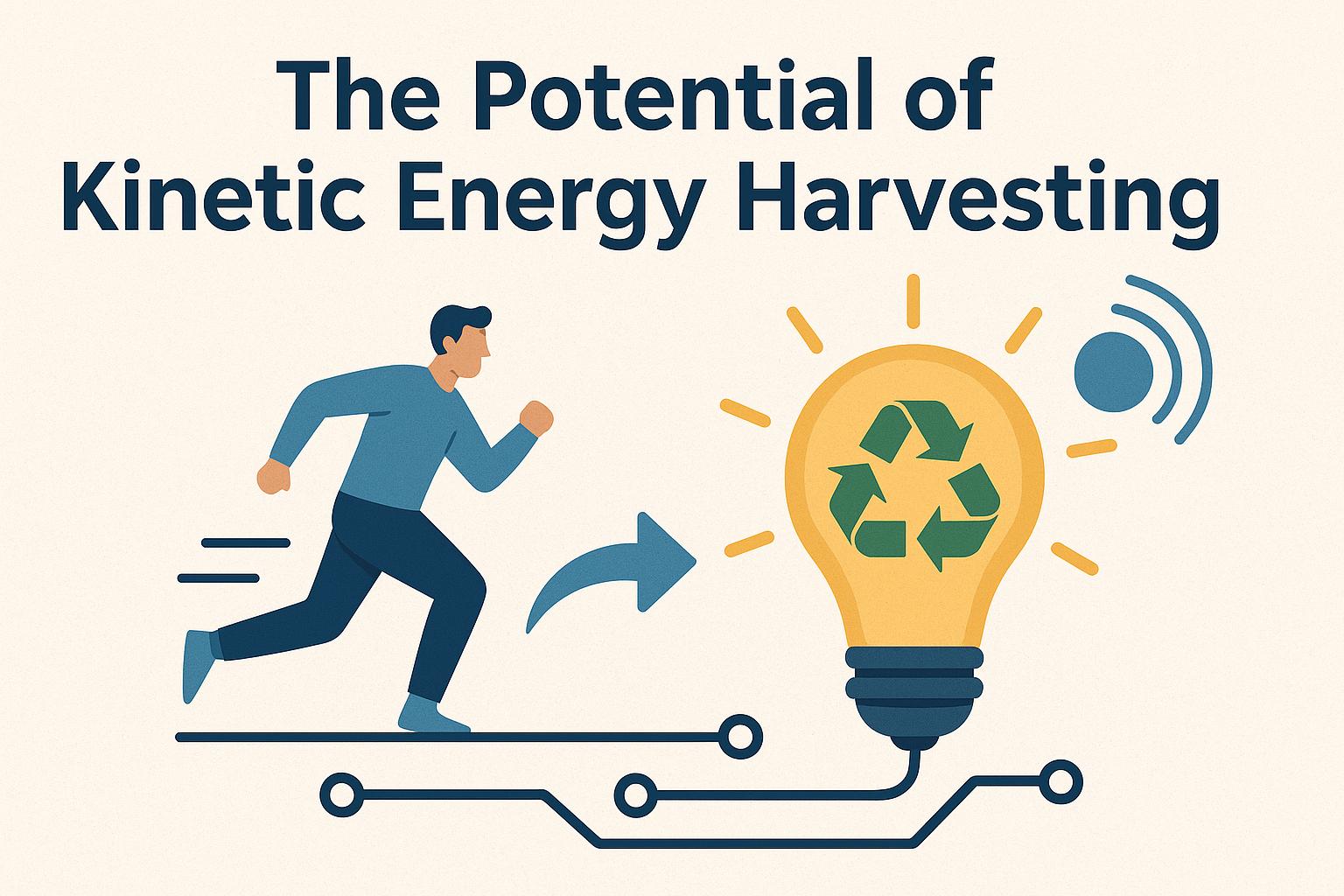
Introduction to Kinetic Energy Harvesting
Kinetic energy harvesting is an intriguing and evolving technology that utilizes the inherent movement of various objects to produce electrical energy. This concept is primarily focused on transforming the energy derived from vibrations, motion, and even thermal gradients into usable electrical power. While this idea might seem cutting-edge, it is not entirely new. For several decades now, researchers, scientists, and engineers have been drawn to the prospect of capturing ambient energy sources to power small-scale electronics and sensors. The potential for these sources is vast, ranging from the movements seen in everyday activities to the repetitive motions found in industrial environments.
How Kinetic Energy Harvesting Works
The backbone of kinetic energy harvesting lies in the mechanisms of transducers, specialized devices engineered to convert one form of energy into another. There are numerous types of transducers, each functioning on distinct principles: electromagnetic, piezoelectric, and electrostatic transducers are among the most recognized.
Electromagnetic transducers capitalize on the principle of induction to generate electricity; as a magnetic field changes in proximity to a coil, it induces a voltage across the coil. Piezoelectric transducers, on the other hand, utilize materials that have the unique property of generating an electrical charge in response to mechanical stress or strain. This means that when these materials are compressed, stretched, or otherwise stressed, they produce electricity. Electrostatic transducers function by exploiting the change in capacitance and require mechanical forces to alter the distance between charged plates, thereby creating electrical energy.
Each of these transducer types is crafted to harness motion from its surrounding environment effectively. The operation and efficiency of these systems are contingent upon several factors, including material properties, mechanical design, and environmental conditions. The varied approaches in which energy is captured and transformed make kinetic energy harvesting a versatile and adaptable solution for a multitude of scenarios.
Applications of Kinetic Energy Harvesting
The applications for kinetic energy harvesting are vast and varied. Its presence is already manifesting itself in dozens of sectors, with potential for expansion continuously being explored. One of the more visible sectors is consumer electronics. Devices such as self-winding wristwatches and fitness trackers often rely on kinetic energy to function without frequent battery replacements. By converting the movement and vibrations from day-to-day activities into electrical power, these devices are showcasing a practical application of this technology.
Similarly, kinetic energy harvesting is making strides in industrial settings. By providing power to sensors and monitoring equipment, these systems aid in creating smart factories—manufacturing environments where machines and systems autonomously communicate and optimize performance. This is part of a broader trend towards the integration of the Internet of Things (IoT) in industry, where interconnected devices provide real-time data and analytics to improve efficiency and safety.
Moreover, the biomedical field is also tapping into this technology. For instance, pacemakers and other implantable medical devices stand to gain from energy harvesting, which could potentially eliminate the need for surgical battery replacements.
Benefits and Challenges
One of the foremost benefits of kinetic energy harvesting is its potential to supply power without the use of traditional batteries. This aspect considerably reduces the frequency of maintenance and replacement, offering a cost-effective and efficient solution over the long term. Moreover, by harnessing energy from ambient sources—such as the vibrations in a busy roadway or the motion within an operational factory—it minimizes dependence on external power supplies. This not only fosters sustainability but also opens avenues for developing technologies in areas where conventional power sources are scarce or unavailable.
Nonetheless, the technology faces certain hurdles. Chief among them is the relatively low power output currently achievable through these systems. This limitation naturally confines its application primarily to low-energy devices. Furthermore, the efficiency of energy conversion is a critical issue; achieving optimal design and integration often necessitates sophisticated engineering and cutting-edge materials.
Ongoing advances in the fields of materials science and engineering hold the key to overcoming these limitations. Developing more efficient energy conversion methods and enhancing the ability to store energy could greatly expand the scope and effectiveness of kinetic energy harvesting applications.
The Future of Kinetic Energy Harvesting
As society advances and the demand grows for sustainable and self-sufficient electronic gadgets, the trajectory for kinetic energy harvesting technology looks promisingly pivotal. Current research and development endeavors are directed towards improving efficiency and broadening its applicable scope. Innovations in materials, transducer design, and integration strategies are anticipated to cement a more widespread adoption of this form of energy harvesting.
One significant area where kinetic energy harvesting is expected to make a substantial impact is the burgeoning field of the Internet of Things (IoT) and autonomous systems. As these systems proliferate, the demand for maintenance-free, autonomous power solutions is likely to enhance the attractiveness of kinetic energy harvesting. By reducing the energy footprint and minimizing waste associated with conventional battery replacements, this technology stands to play a critical role in creating greener, more sustainable technological ecosystems.
In conclusion, while kinetic energy harvesting currently presents some technological challenges, its potential to transform how devices source and utilize power is profound. As the technology continues to mature and evolve, it is positioned to be an integral component in the journey toward a more sustainable and energy-efficient global future.
For those interested in delving deeper, several research institutions and technology companies are at the forefront of exploring and expanding upon these advancements in energy solutions, offering a wealth of information and potential collaboration opportunities.